
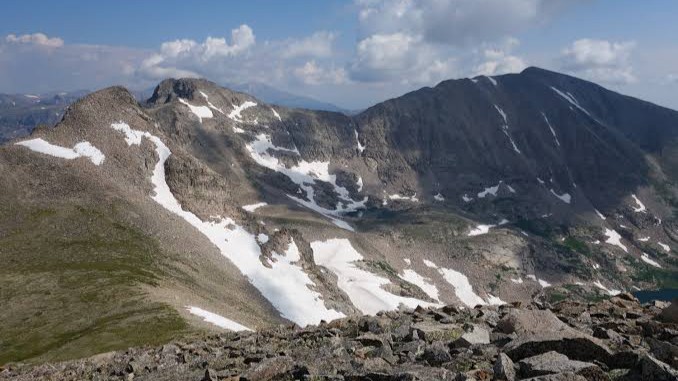
Earlier this summer I wrote about the High Lonesome Loop, 15.5 miles and 3,500’ of vertical, and about setting goals big enough that failing is a possibility.
A week later, we set out on a more challenging route, one that we were unsure that we would finish.
The plan
A 15-mile loop through the Indian Peaks Wilderness, linking four summits: Audubon, Paiute, Toll, and Pawnee. All over 13,000′. 4,500′ of gain. Unlike High Lonesome, almost none of the route was on trail. Boulder fields, loose talus, exposed ridgelines, 3rd and 4th class terrain. Steep enough to require hands, with enough exposure that a fall could be consequential.
We left Boulder at 3:30 am and the trailhead by 5:15.
Audubon went fast: 2,700’ of climbing to the 13,200′ summit in under two hours, mostly on smooth trail until a boulder field near the top. Then the terrain changed. Getting to Paiute meant descending 500′ and climbing back up over loose rock, slower going than it looked. Along the ridge, we could see Toll’s north face across the basin: steep, technical, and a little intimidating.
An hour later, atop Paiute, we faced two problems. A water bottle had leaked, and it was getting hot. And the route up Mt Toll, which we’d been told was a straightforward gully, didn’t look straightforward at all. Vertical cliffs, rocky slabs. Nothing we wanted to climb without the gear we’d left in the car.
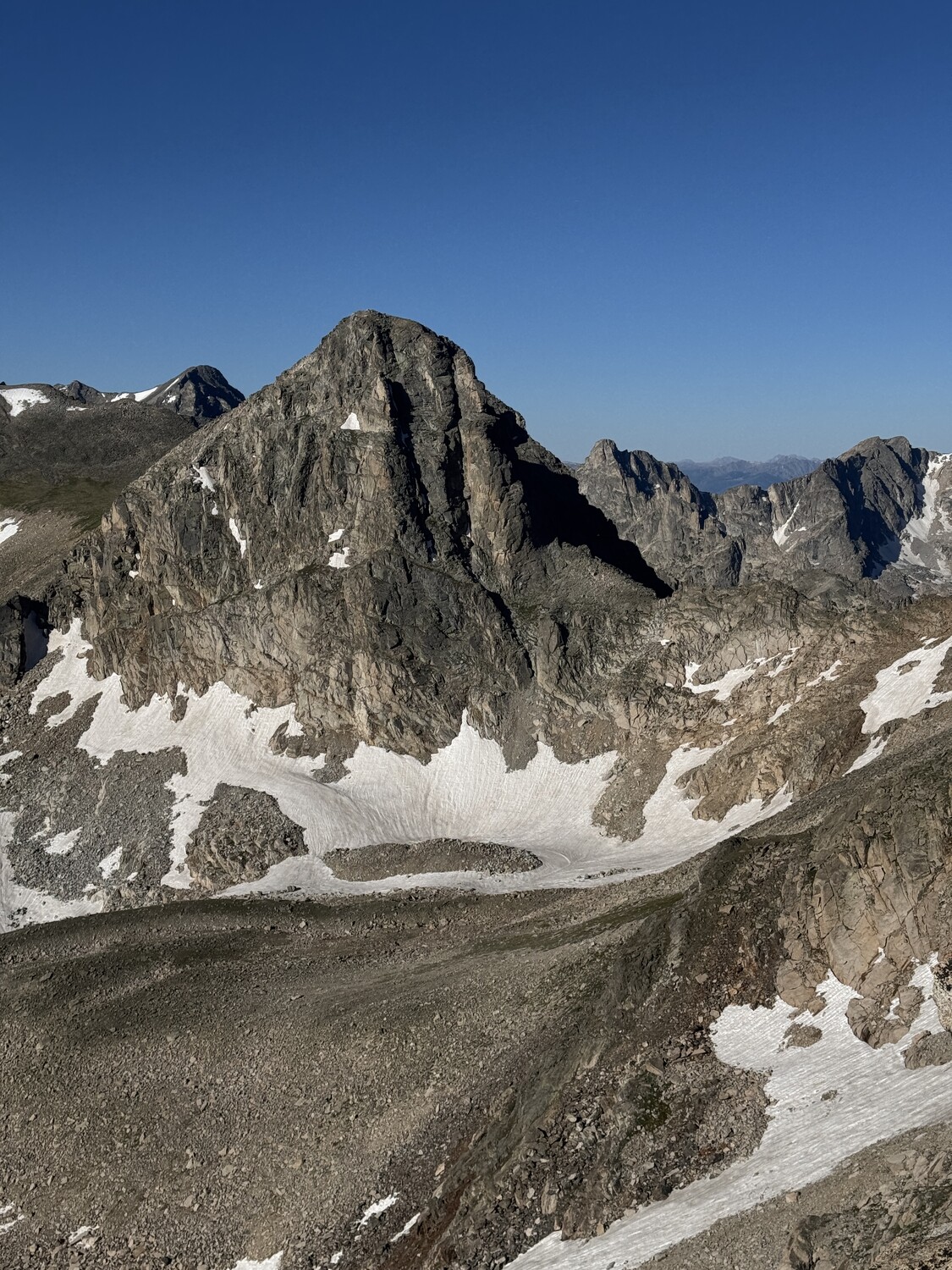
We were dehydrated and unsure of the terrain, but we kept going, with the mentality: keep going until it stops making sense.
It worked. We found a narrow, loose gully around the west side of Toll, some easy Class 4 moves, that put us on the saddle below the summit. An easy boulder field from there to the top.
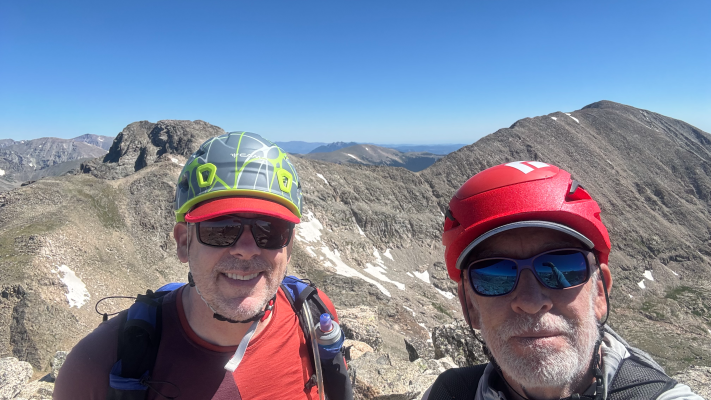
Standing on Toll, tired and out of water, we discussed the rest of the route. Reaching Pawnee meant a long descent over boulder fields, a steep climb to the summit, and then 5 miles back to the trailhead, much of it off trail. We could have pushed on. Instead, we turned around and spent the next hour carefully picking our way down through loose scree, slabby rock and summer snowfields to Blue Lake and back to the trail.
What This Has to Do With Leadership and Teams
We didn’t finish the route we set out to do.
Still, we had a great day in the mountains. We got a good workout, trained for our bigger goal of running the Grand Canyon rim-to-rim in a day, and, most importantly, came home safely. Looking back, two interrelated leadership insights stand out, ones that I regularly see with executive leaders and teams.
Commit to a goal because it moves you forward, not just because you might complete it.
I often hear senior leaders and teams hesitate to commit to a big goal, a new initiative, or a change. Not because they doubt it, but because they aren’t certain they’ll fully succeed. So, goals get sidelined, waiting for better odds.
We are remarkably creative at building a case for why now is not the right time: “It may not work.” “What if we don’t succeed?” “We’ll start when things slow down.”
I work with companies and teams that have had the same few priorities for years: greater consistency with internal stakeholders, improving Emergency Room discharge times, elevating team accountability and performance. They make cursory efforts, but the time is never right to commit.
If you commit to a big, bold goal and reach it, that’s great, you’ve done something you didn’t know you could. But the real win is committing itself. You make progress on a problem, stress-test your team, your systems, and your assumptions, and build the mindset, capability, and confidence to try again. None of that happens without committing in the first place.
Get started by testing.
The challenge many leaders face with big, bold goals is a self-defeating cycle. Leaders know these goals demand massive effort, time, and energy that may seem better spent on smaller solvable fires, so they do not commit. But failing to truly commit, and therefore make progress creates a spiral of discouragement, backsliding, and diminished effort, often ending with abandoning or postponing the goal.
The way around it is to set micro-goals, try something that moves the needle, and be willing to fail fast, before the stakes get too high to turn back.
Three recent examples, each with a big goal that would take months and no easy fix, started with a short-term test:
- An executive team tried a new meeting structure for 6 weeks, then re-evaluated based on feedback.
- A hospital CEO tested a new Emergency Room practice for two weeks to improve discharge rates.
- A leadership team focused on employee engagement tested weekly 1:1s in a few key departments.
This isn’t about trading the big goal for a small one, it’s about how you get there. Testing a hypothesis about what might work shifts the focus from the big goal to what you control now. Try it. See what happens. Re-evaluate.
That’s what we did. We shifted our goal from completing the loop, or summiting Toll, to something within our control: we’ll just go a little further, around that corner, and see what the terrain looks like. What we found was a clear path forward.
The goal of this adventure was never only in reaching Pawnee. It was to test ourselves and train for something bigger. We committed to a goal that we were unsure that we could complete, and we were willing to keep going, testing a hypothesis (that the route would go) when the path forward became unclear.
What’s Getting in the Way of Your Goals?
Where are you or your team avoiding a critical project or initiative, not because it isn’t important, but because the time isn’t right or you aren’t sure you’d succeed?
What would you accomplish by getting started? What might you learn?
For a big goal where momentum is lagging, what short-term hypothesis could you test, what action could quickly implement and try out?
You don’t need a guarantee. You need to leave the trailhead.

