
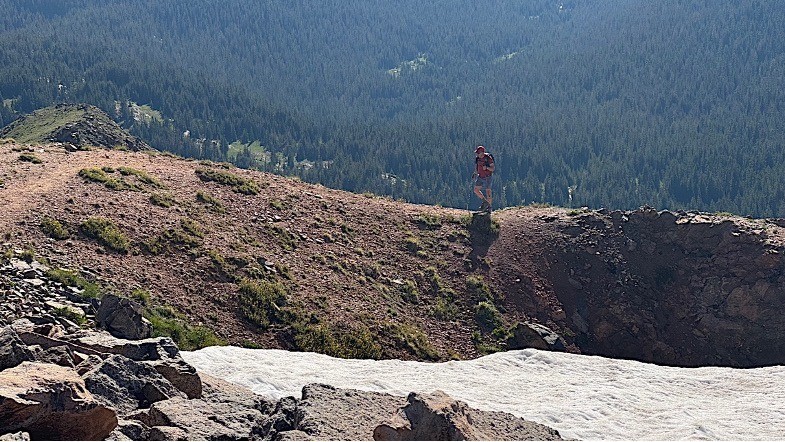
An Adventure on The High Lonesome Loop
There’s a trail in Colorado’s Indian Peaks Wilderness that I’ve been thinking about for years. The High Lonesome Loop.
15.5 miles. 3,500’ of vertical. Starting at 9,000’ deep in the forest, rising up to alpine tundra, cliffs, summer snowfields, and mountain lakes, crossing the Continental Divide at 12,000’.
For years, I talked myself out of it. When I’m in better shape. When I’ve trained more. When the weather is better. When I’m ready.
You know those conversations. You’ve had them too. Maybe not about a trail, but about something. A role you haven’t applied for. A conversation you haven’t started. A strategic move your organization hasn’t made. There will always be a reason to wait until you have the time, the resources, or the support, the technology transformation is done, you hire the right people, you get through the current changes…
The reasons or excuses not to act will always be there. We are remarkably creative when it comes to building cases for why now is not the right time.
4:30 AM, Boulder, Colorado
This past weekend, I stopped waiting.
We left Boulder at 4:30 in the morning. Hit the trailhead at 5:30, just as it was getting light. The first 6 miles are manageable, steady climbing, good trail, gaining about 2,000’ through the trees. Then the landscape gives way to high alpine lakes, wildflowers, and towering spires. The trail steepens, and for the final mile you’re climbing hard, another 1,500’ to the Divide. Legs burning, lungs aching, one step after another. And then you are there. The world opens up, wide and windswept, nothing between you and the horizon.
We moved quickly along the Divide for several miles, the trail easy now rolling across the tundra. Then drops steeply, nearly 3,500’ in 6-miles back to the trailhead.
It was hard. Physically hard. My feet hurt. Arthritis in my knees flared up.
And here’s the thing: it wasn’t as hard as I thought it would be. It wasn’t as hard as I had imagined for all those years while I was busy not doing it.
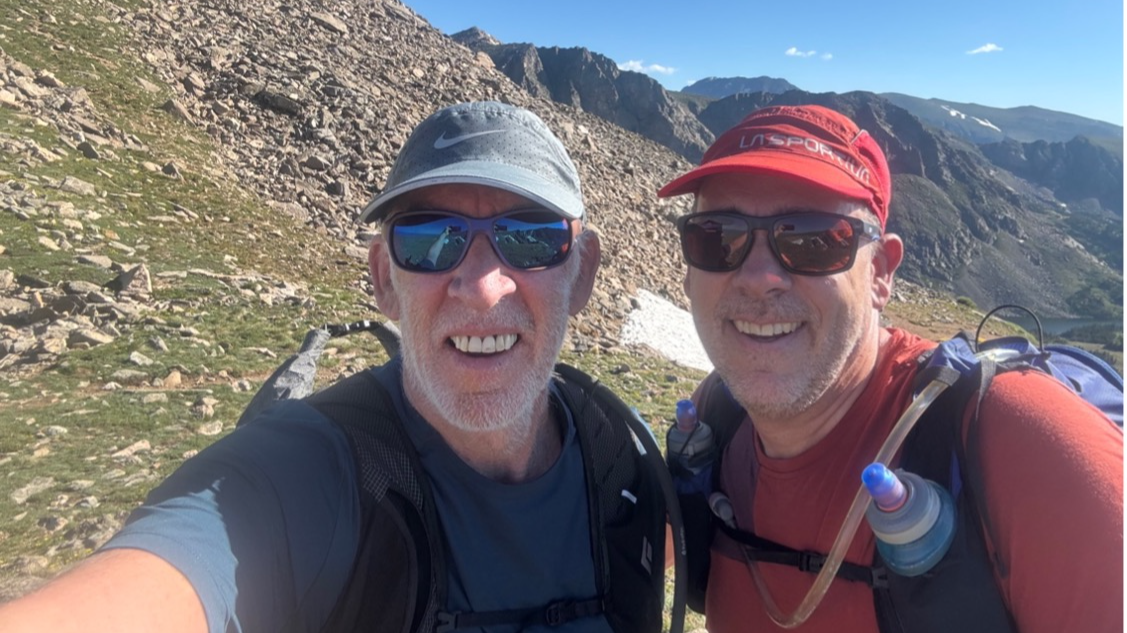
It was gorgeous. It was fun. It was one of the better mornings I can remember, moving through mountains with good friends, body pushing, lungs and legs working the way they’re supposed to.
The Real Reason I Did It
I didn’t wake up one morning full of clarity and decide to finally do the High Lonesome. What changed was that I made a bigger, scarier commitment first.
My friend John Winsor and I are planning to hike and run the Grand Canyon, the South Rim to North Rim, in October. 24 miles. 4500’ descent to the river. 6000’ of climb back to the rim. It is not a casual undertaking, especially in the 100+ degree temperatures, common at the bottom of the canyon.
My training has been comfortable, weekend rides, short runs, a few days a week at the gym. But comfortable doesn’t prepare you for 24 miles across the Grand Canyon. I needed a bigger test. The High Lonesome Loop became the forcing function.
Big goals have a way of doing that. They generate sub-goals. They create urgency. They make you honest about the gap between where you are and where you need to be.
What This Has to Do With Your Work
Over the past several years, I’ve had the privilege of working with Empactful Advisors, coaching and supporting leaders through 90-Day Growth Accelerators — a highly structured approach to drive breakthrough results by accelerating outcomes, testing strategic hypotheses, and piloting new ideas, while delivering results and catalyzing initiatives that aren’t moving at the speed that matters.
These aren’t nice-to-have initiatives. They’re the critical ones: operational excellence, M&A integration, business model reinvention. Healthcare, oil and gas, mining, commercial real estate. Organizations facing quickly changing landscapes, ever-increasing pressures, and the reality that transformation is no longer optional.
What I’ve learned from hundreds of hours with leaders inside these accelerators and elsewhere, is something that sounds simple but is genuinely hard to hold onto under pressure:
Transformation and transformative growth require you to set goals that scare you a little. Maybe more than a little.
Not reckless. Not delusional. But a goal that stretches you past your current edge. A goal that makes you sweat when you say it out loud. A goal that demands more than your current habits, your current thinking, your current systems, your current beliefs about what’s possible.
Here’s why it works
If you set a big, bold goal and you reach it, that’s extraordinary. You’ve done something you didn’t know you could do.
If you set a big, bold goal and you fall short, you are still further ahead than if you had set a small, safe goal and hit it. You’ve learned where the real edges are. You’ve stress-tested your team, your systems, your assumptions. You’ve made real progress on a real problem. And you’ve built the mindset and capability, and the confidence to try again.
The only losing move is the one I made for years with the High Lonesome Loop: deciding not to commit or not to try, deciding you’re not ready, letting the goal live in your head as a nice-to-do idea, or as something to do someday.
What Big Goals Actually Do
Big goals don’t just drive outcomes. They reveal people.
They show leaders and teams what they’re actually capable of when they set aside the excuses, the self-doubt, the perfectly reasonable cases for waiting. They build a kind of confidence that can’t be handed to someone — it has to be earned, step by step, on hard terrain.
They create momentum. A team that achieves something hard, even imperfectly, even messily is a different team than the one that started. They’ve seen themselves do hard, improbable things. And that changes what they believe is possible next.
And they keep us honest. The gap between your current state and your big goal tells you exactly where you are and what work needs to be done.
What This Adventure Left Me With
Back at the car, tired and happy, one thought kept running through my mind: I should have done this years ago. What was I afraid of? And, if I can do this, what else can I do?
The thing I had been building into a mountain in my head was just a trail. A hard, beautiful, worthwhile trail. I had let the imagined version of it be harder than the real version.
Your big goal is probably not as impossible as you’ve told yourself. The gap is probably closeable. The team is probably more capable than you’ve given them credit for, and if not, that’s the work: closing the gap, communicating the expectations, building what’s needed.
But you have to go. You have to leave the trailhead. You have to be willing to feel the hard miles and find out what’s on the other side.
What’s Getting in the Way of Your Goals?
- What goal have you been waiting to take on someday, when you are “ready”?
- What would it take, not to guarantee success, but to simply begin?
- Where in your organization are you playing small because a big goal feels too uncertain, or you are not sure where to start?
Stop waiting to be ready. Set the goal. Show up at the trailhead.


One thought on “On Big Goals, Excuses, and Getting Out of Your Own Way”